A 45 y.o. nurse practitioner comes to the ED with sudden loss of vision in the R eye
Her fundus is shown below
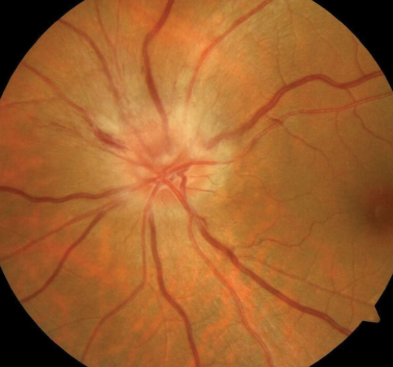
hint: she is diabetic and on a GLP-1 for weight loss.
Our patient had Non arteritic anterior ischemic optic neuropathy (NAION). She has a swollen, pale optic disc with blurred margins and splinter hemorrhages and has an afferent pupillary defect.
NAION is the most common acute optic neuropathy in people over the age of 50. It causes sudden painless vision loss. A well-established risk factor for the development of NAION is a small disc and a small or absent physiologic cup. Normally, the cup is 1/3 the size of the disc. If it is smaller, the optic nerve is structurally compressed and prone to a compartment syndrome causing ischemia. This is thought to occur when a sudden decrease in blood supply to the nerve occurs. Certain drugs have been associated with this condition including GLP-1 drugs commonly taken for weight loss. Since the mechanism is ischemia of the nerve any decrease in blood pressure can potentially cause the condition. Multiple reports exist of blindness occurring after prolonged surgeries and cardiac resuscitations.
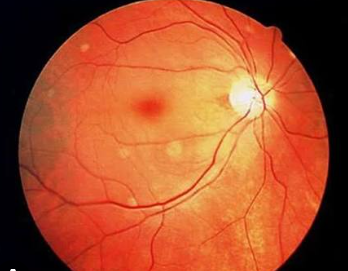
there is no disc swelling in central retinal artery occlusion
Central retinal artery occlusion(CRAO) also presents with sudden painless vision loss. Fundal findings for central retinal artery occlusion include: a pale disc but also the entire retina is pale since the inner retina is ischemic instead of just the optic nerve head as in NAION. There is a cherry red spot on the macula . In NAION there is marked disc edema which does not usually occur in CRAO.
THE DIFFERENTIAL DIAGNOSIS OF OPTIC NEUROPATHY
ISCHEMIA- includes non arteritic ischemia as in our patient(NAION) and also arteritic ischemia(AAION)- giant cell arteritis. HYPOTENSION/HYPOXIA either during surgery or after a cardiac arrest can result in blindness because of ischemia to the nerve.
INFILTRATION -lymphoma or leukemia can directly invade the optic nerve
COMPRESSION- tumors and Graves disease can cause direct compression of the nerve causing decreased blood flow
INFLAMMATION- included in this is most common kind of optic neuropathy in the US; multiple sclerosis. Most people with MS do not have disc swelling since the demyelination is retrobulbar. Systemic diseases like sarcoid and SLE, neuromyelitis optica (very prevalent in China) also cause inflammation.
INFECTION- IS most commonly caused by tuberculosis in the rest of the world. Syphilis, lyme , bartonella, CMV herpes zoster and sinusitis lead the list of infectious causes in the US which cause optic nerve inflammation.
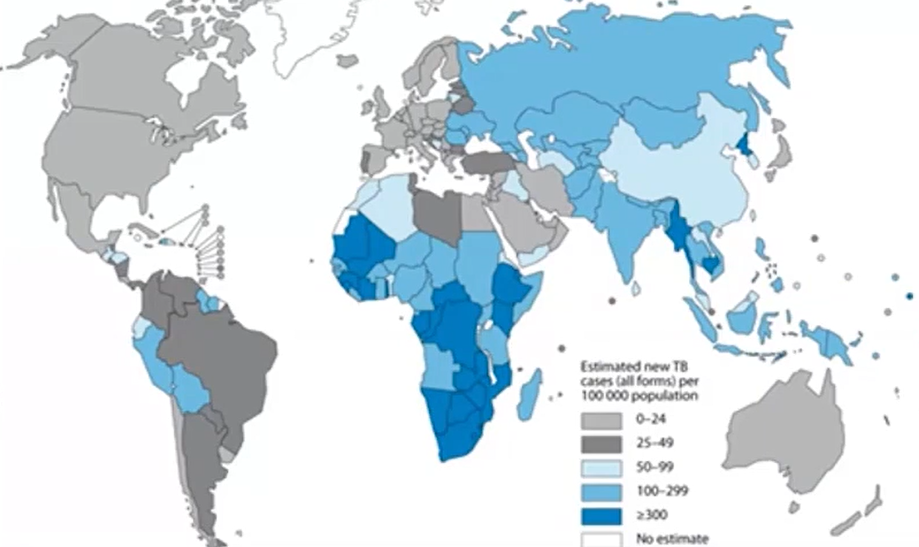
tuberculous vision loss is common in much of the world
MICELLANEOUS- There are nutritional and toxic causes of optic nerve damage. Nutritional optic neuropathy is more common in patients who have had bariatic surgery and is related to B vitamin loss. Several drugs have been associated with optic nerve injury including sildenafil and amiodarone. These neuropathies tend to occur gradually.
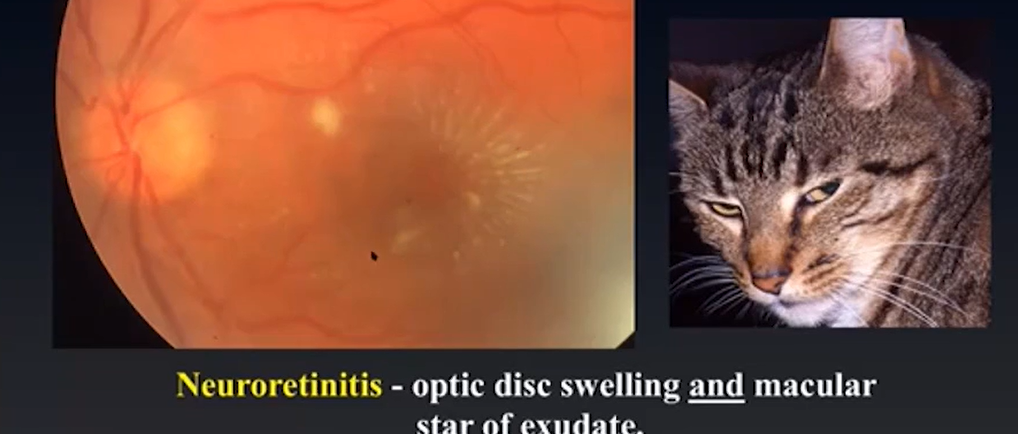
consider Bartonella in young patients with vision loss
FUN FACTS
417 cases of visual impairment due to ischemic optic neuropathy have been reported in the literature linked to semaglutide. 257 cases of ischemic optic neuropathy were reported from 1998-2012 after spine surgeries.
Hathaway J, Shah M, Hathaway D. et al. Risk of nonarteritic anterior ischemic optic neuropathy in patients prescribed semaglutide.2024. JAMA Ophthalmology Vol 142(8).
Dattilo M, Tian T, Peragallo J. et al. Very poor visual acuity in non-arteritic anterior ischaemic optic neuropathy . Neuroophthalmology 2020 Jul 22;45(1):23-28.
Massy M, Marti S, Hammer H, Hoepner R. Increased vision impairment reports linked to semaglutide: analysis of FDA adverse event data. BMC MED. 2025 Apr 7;23:203.
Davis E, Rathinam S, Okada A, et al. Clinical spectrum of tuberculous optic neuropathy J Ophthalmic Inflamm Infect. 2012 May 22;2(4): 183-189.
Narayanan S, Prakash D, Subramaniam G. Bilateral primary optic neuropathy as presenting manifestation of tuberculosis in an immunocompetent patient. IDCases. 2019 Jul11;18:e00579.