A 26 y.o. high on K2 was brought in by police because he was observed eating a roadkilled raccoon
He was covered in blood and the police questioned whether he needed rabies prophylaxis.
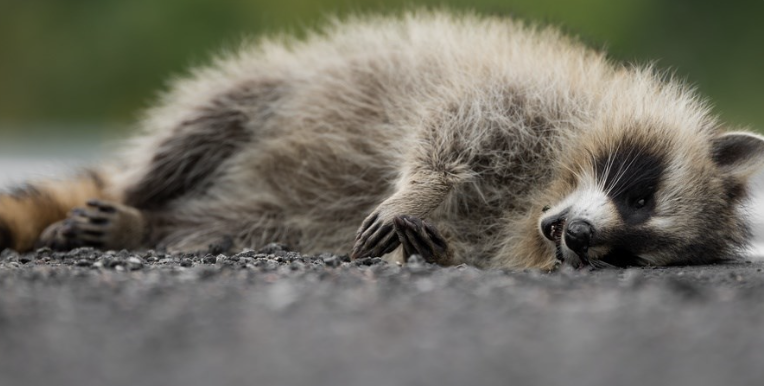
What do you think?
Raccoons are one of the primary reservoirs for rabies in the US with 29% of all reported wildlife cases attributed to raccoons. Other reported cases of rabies occur in bats (35%, skunks (17%) and foxes(8%).
Rabies is a fatal yet preventable disease which is transmitted through the saliva of infected animals to an individual with a bite or even by licking an open wound.
There have been multiple rabies exposures in the US in 2026 including three attacks by rabid beavers in Maryland and multiple children and adults exposed to a rabid goat at a petting zoo in South Carolina. It may be time to review rabies and post exposure prophylaxis.
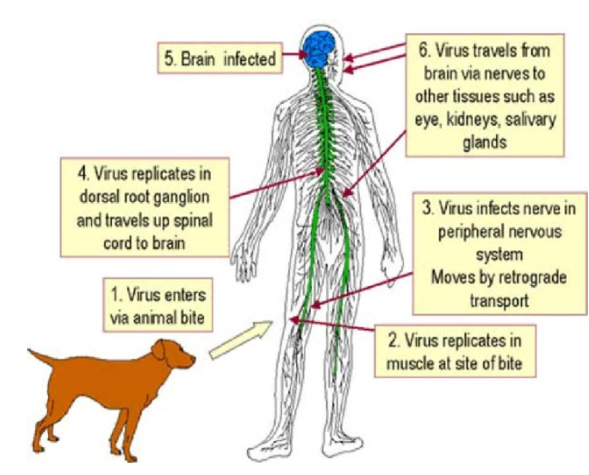
the brain is the final site for rabies
THE VIRUS
The virus is transmitted through infected saliva and at first replicates at low levels before it enters the neuromuscular junction. Incubation of the disease varies from a week to over a year depending on the distance of the bite from the brain. Earliest symptoms include fever, burning at the wound site and intense itching. The virus travels along peripheral nerves until it reaches the spinal cord and then brain where it causes progressive nerve excitation and eventual death.
Rabies has two forms furious and paralytic. The furious form comprises 80% of rabies cases and is signaled by hydrophobia , hyperactivity and aggression. The hydrophobia happens when the patient experiences spasms of the throat and larynx as they try to swallow. These are signs of encephalitis and if the limbic system is involved hypersexuality may result as well. Aggression and biting serve to spread the virus to other animals. Signs of encephalitis last hours to days with lucid intervals in between episodes of aggression. After death the anterior horn cells are found to be destroyed.
Paralytic rabies presents differently. The patient is lucid and calm. Flaccid paralysis begins with the muscles near the wound and extending upward to cause quadriplegia. Death is due to respiratory arrest. This condition mimics Guillan Barre. After death, peripheral nerves are found to be demyelinated.
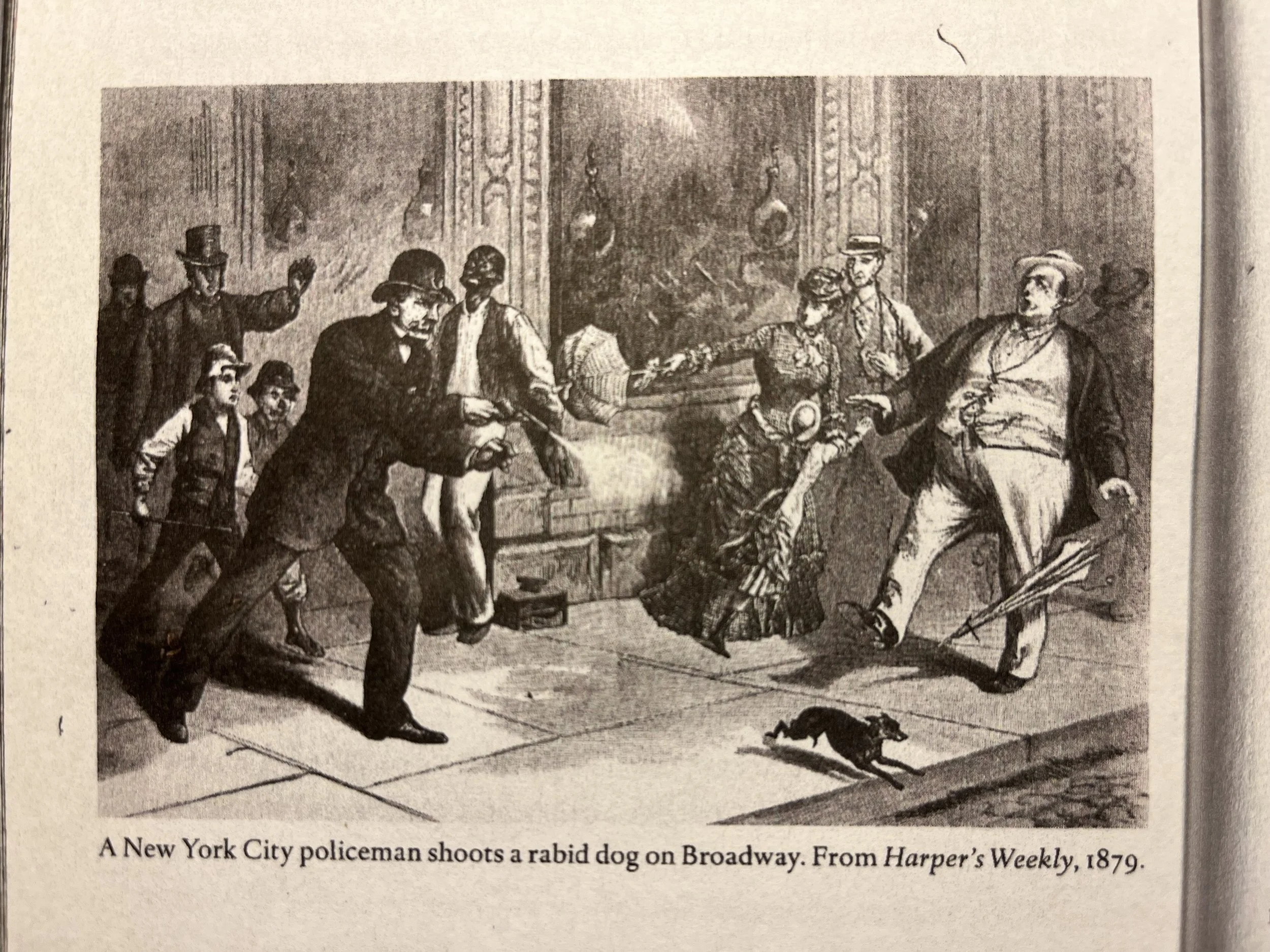
prior to most dogs being vaccinated; rabid dogs were a menace on city streets.
OUR PATIENT
Since the virus is transmitted by a bite and a dead animal cannot bite could our patient be at risk? There are still two ways the rabies virus could be transmitted. If the head was crushed when the car hit it; CSF could be present and the patient could be exposed to virus and also animals groom themselves so saliva could be on the fur. The patient could contract it from the fur. The CDC recommended that the patient get prophylaxis. Our patient received one shot of vaccine and rabies immune globulin. He stayed in the ED until he was lucid and then was lost to follow up.
The cost of rabies prophylaxis is $25,000-$50,000 for the uninsured patient which includes the cost of going the the ED for four shots. Human Rabies Immune Globulin (HRIG) which is injected at the site of the bite on day 0. The four dose vaccine series is given days 0,3,7, and 14.
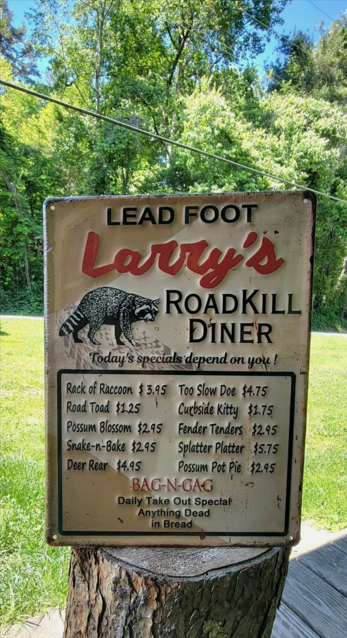
Road kill is no longer being picked up in Minnesota because there are too many dead deer.
FUN FACTS
The Milwaukee protocol, an induced coma after rabies exposure saved the life of Jeanna Giese in Wisconsin at the cost of $1,363,636. She was markedly biopterin deficient after recovery. The Milwaukee protocol has been tried multiple times since without success. Jeanna is the only person known to have survived rabies without the vaccine.
Raccoon rabies is most prevalent on the East Coast of the US. In the Midwest, skunk rabies is more common and in the southwestern US and Texas, foxes are the primary reservoir.
Louis Pasteur discovered how rabies is transmitted in 1885 and developed a vaccine. He inoculated rabbits with the virus. When they died he dried their spinal cords . The longer it dried, the weaker the virus became. He started injecting the weakened virus in dogs and gradually moved up to stronger doses until an immune response was achieved. He then vaccinated humans.
A raccoon with rabies usually dies within ten days of symptom onset because the virus has reached the brain when symptoms occur.
Wasik B, Murphy M. Rabid. A Cultural History of the World’s Most Diabolical Virus.
Penguin Books. New York, New York. 2013
Mork T, Prestrud P. Arctic rabies—a review. Acta Vet Scand.2004 March 31;45(1):1-9.
CDC Rabies Duty Officer: If you need specific laboratory specimen submission or specialized clinical consultations after speaking with your state health department, reach out to the CDC Rabies Laboratory at 404-639-1050.
Steinberg H, Bernis K, Frias M, Christiansen D. Inappropriate administration of rabies postexposure prophylaxis, Cook County, Illinois, USA Emerg Infect Dis
2020 Oct;26(10):2515–2517.
Shite A, Guadu T, Admassu B, Challenges of rabies. 2015. International Journal of Basic and Applied Virology 4(2):41-52.