A 30 y.o. airport worker is referred to the ED for abdominal pain and ascites.
Her CA 125 was reported to be 195 (nl- 0-25) her CT is shown below.
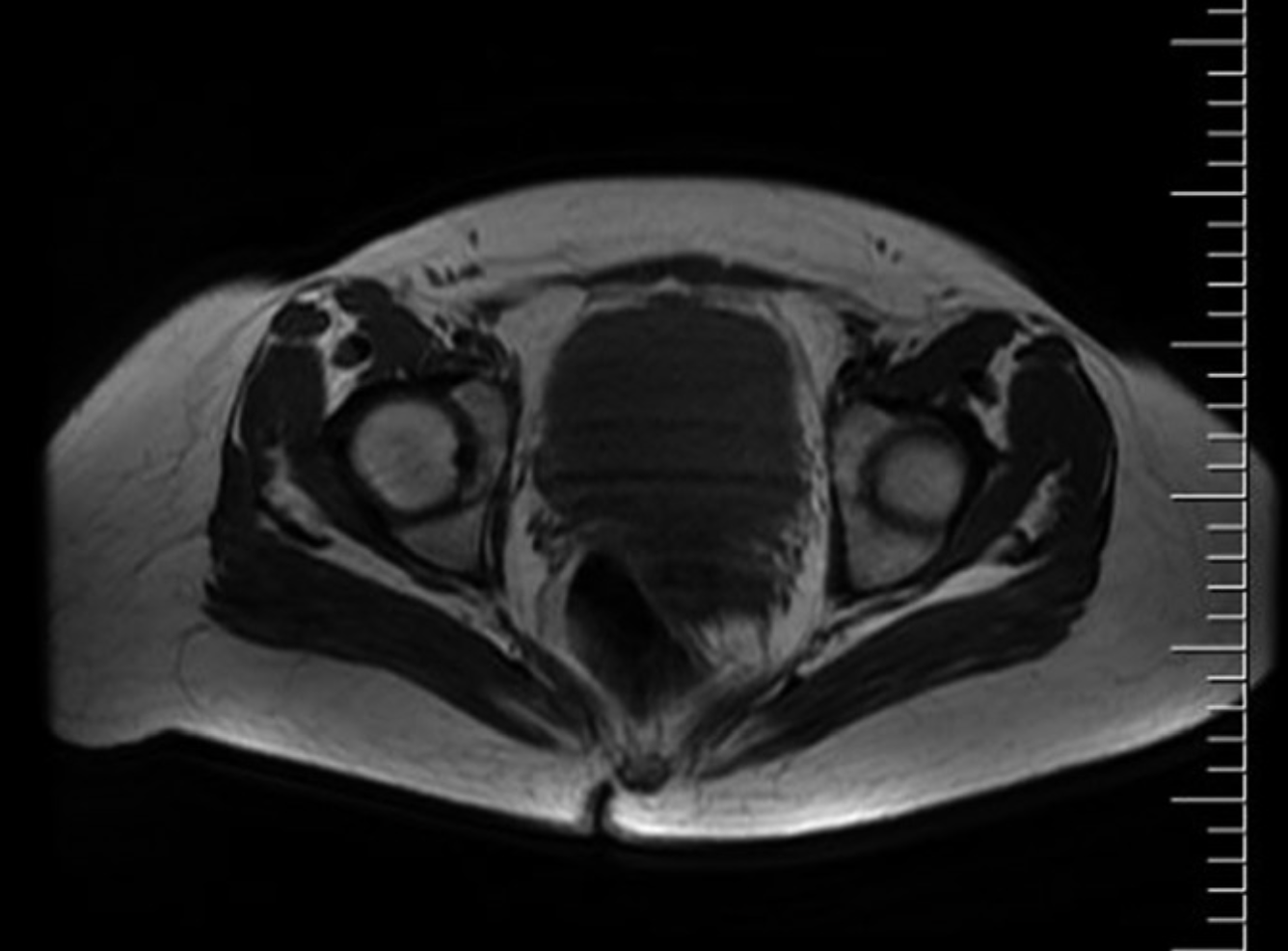
what diagnoses could be entertained?
Our patient had tuberculous peritonitis.
CA-125 can be elevated due to both malignant and non-malignant causes. While it is used as a marker for ovarian cancer; it can also be elevated in PID, fibroids, pregnancy, liver disease and infectious conditions like tuberculosis.
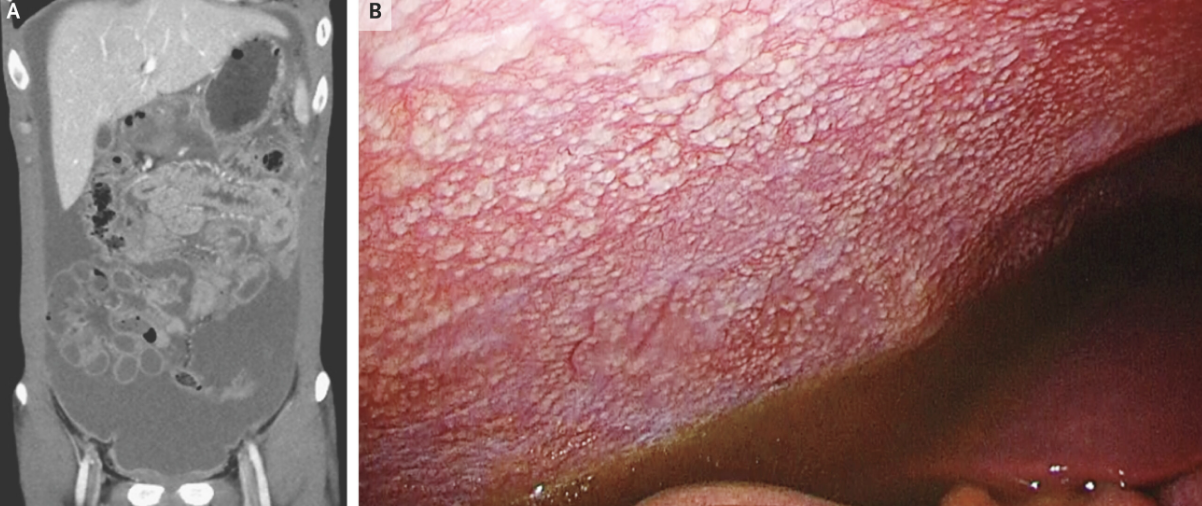
on laparoscopy multiple nodules are seen on the serosal surface
Tuberculous peritonitis is the most common form of extra pulmonary tuberculosis and is present in 15-20% of cases worldwide. It can occurs in patients without pulmonary involvement. Tuberculosis is a bacterial disease that the body walls off by encasing it in tubercles . (think granulomas.) The disease can reactivate and be transported through the bloodstream infecting the peritoneum if immunosuppression occurs.
There is also direct involvement of the peritoneum by spread from pelvic organs. Once the peritoneum is involved one of three things occurs.
Wet peritoneal Tbc- implants on the peritoneum occur and ascites accumulated
Dry peritoneal Tbc- no ascites occurs but mesenteric nodes may be enlarged.
Fibrotic peritoneal Tbc-matted loops of bowel adhere to each other and the abdominal wall. Bowel obstruction can occur.
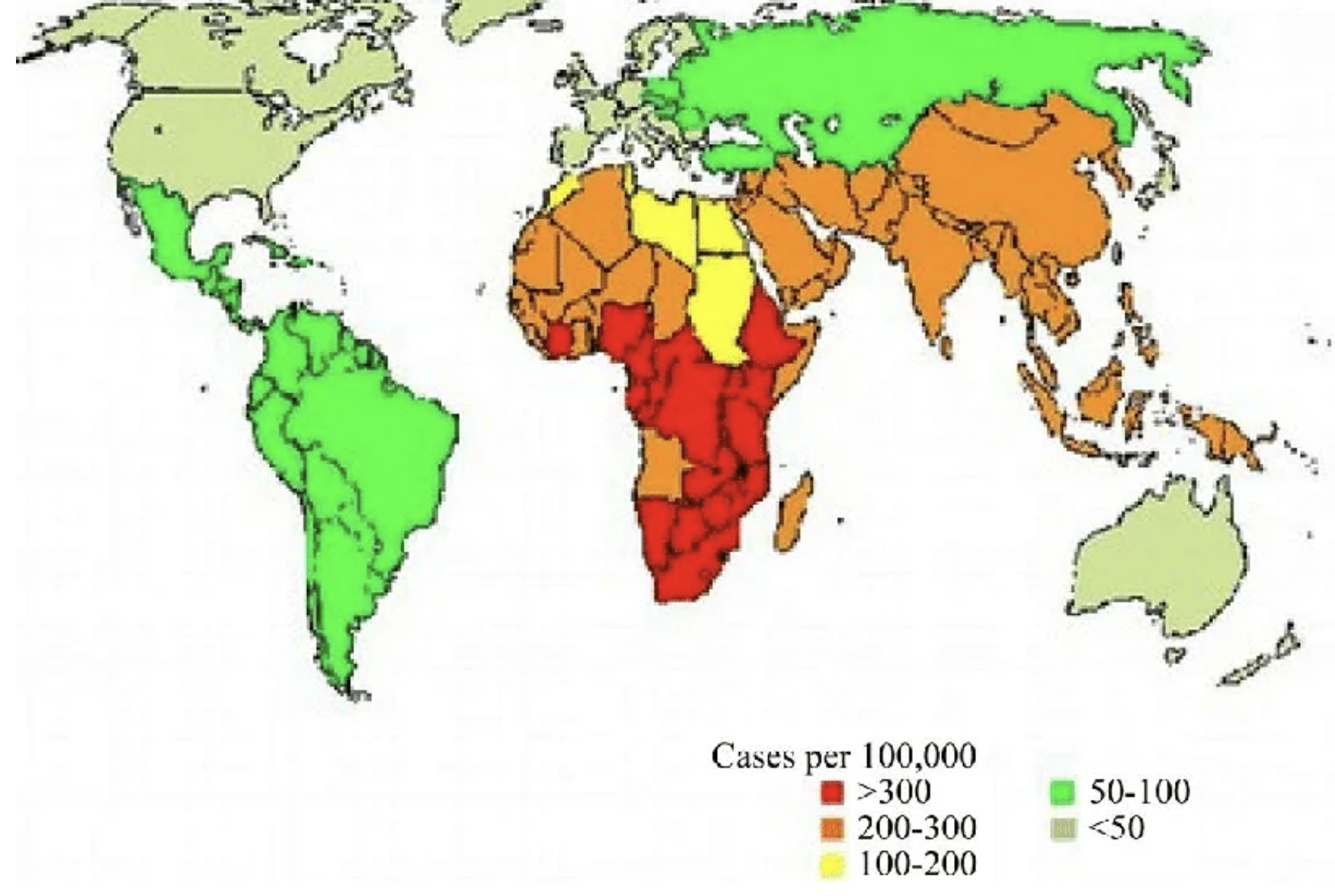
mycobacterium bovis is a separate disease and found in areas with unpasterurized milk
While the majority of tuberculosis occurs in developing countries, the immunosuppressed are also at risk in the US. The drug most closely associated with peritoneal Tbc is infliximab, an anti-TNF agent used in. Crohn’s disease. If reactivation of Tbc occurs in patients taking this drug TNF which maintains the tuberculous granulomas walled off is diminished allowing the bacteria to spread. Tacrolimus, and JAK inhibitors like ruxolitimib are also associated with reactivation.
THE DIAGNOSIS
Tuberculous peritonitis is difficult to diagnose and often requires a peritoneal biopsy. ADA (adenosine deaminase) found in the ascites is highly predictive of the disease.. It is elevated because tuberculosis stimulates T lymphocytes to produce it. A problem in making the diagnosis is that if peritoneal Tbc occurs in the immunocompromised: fever may be absent and blood or skin tests are often negative.
TREATMENT
Treatment requires two months of intensive four drug treatment with INH, rifampicin, pyrazynamide and ethambutol followed by 4 months of rifampin and INH.
Our patient was diagnosed with a peritoneal biopsy. The source of the tuberculosis was unknown but presumably from contact with a foreign traveler at the airport where she worked. She received six months of treatment and recovered. Her contacts were tested and found to be negative.
INTERESTING FACTS
20-40% of patients with peritoneal TBC develop an acute abdomen requiring surgery.
One quarter of the world’s population carries a latent tuberculosis infection.
Dilara B.G., Bilal K., Ekrem B., Ihsan A., Nisbet Y. A Case Report of Peritoneal Tuberculosis: A Challenging Diagnosis. Case Rep. Infect. Dis. 2018;2018:4970836.
Okamoto K, Tuberculous peritonitis. NEJM 2018;379:e379 e20.
Gokten D, Katipoglu B, Basara E, et al. A case report of peritoneal tuberculosis: a challenging diagnosis. Case Rep Infect Dis. 2018 Jan 11;2018:4970836
Yanusha V, Mayurathan P. Primary peritoneal tuberculosis in an immunocompetent patient: a case report. Cureua 2026 Jan 20;18(1)e101943.
Umesh Kumar Chandra. Tuberculosis of the tongue; a rare presentation of a common disease. Indian Journal of Medical Research. 152(Suppl.) S212-S213.
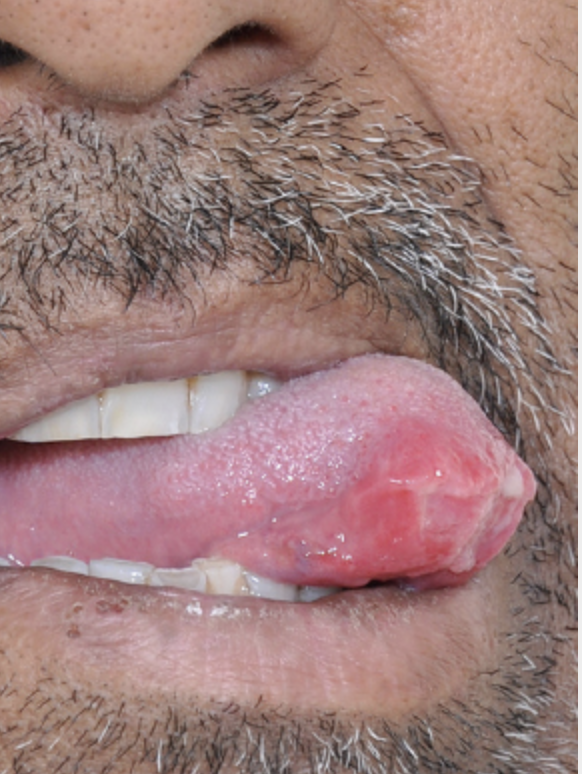
oral tbc is a rare form of non pulmonary tbc