A 60 y.o. male presents with a painful lesion on his tongue.
He also has a history of eye problems, hoarseness, arthritis and a thoracic aortic aneurysm. What unifying diagnosis might be entertained?
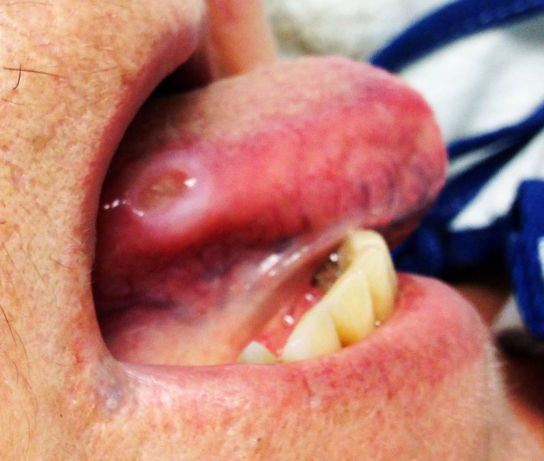
Our patient had relapsing polychondritis.
Relapsing polychondritis is an autoimmune disease affecting cartilaginous structures and proteoglycan-rich tissues such as the nose, trachea, blood vessels, sclera kidney and joints. While it is thought of as affecting only cartilage; proteoglycans are present in many areas of the body in the extracellular matrix of connective tissues. Relapsing polychondritis was first reported in 1923. Susceptibility has been associated with HLA-DR4 although the cause appears to be multifactorial.
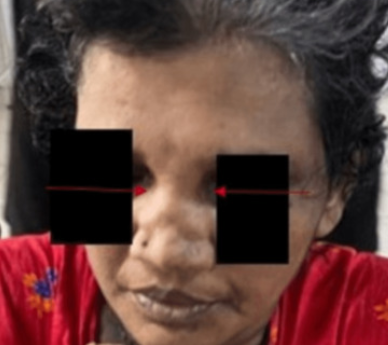
saddle nose deformity is the classic finding of relapsing polychondritis
CLINICALLY
Joint involvement is a common presentation. Other typical clinical features include saddle nose deformity, auriculitis, and laryngotracheobronchomalcia . There is often laryngotracheal involvement with subglottic stenosis and vocal cord paralysis . Aortitis can occur with structural weakening of the media in the aorta. Cardiovascular complications affect 25% of patients including pericarditis.
Our patient also had oral ulcers which can occur in an overlap syndrome called. MAGIC syndrome. (Mouth and Genital ulcers with Inflamed Cartilage) which is a combination of relapsing polychondritis and Behcet’s disease. Behcet’s disease, with painful oral and genital ulcers is most prevalent in Turkey, Japan , Korea and Middle eastern countries. Behcet’s is associated with aortic dissections, and pericarditis. Behcet’s is a vasculitis with inflammation of vessels on tissue biopsy while relapsing polychondritis is not considered a vasculitis. There are many autoimmune diseases associated with Behcet’s including RA, Crohn’s disease and lupus.
Our patient never had genital ulcers although he did have a thoracic aneurysm, mild vocal cord abnormality and episodic joint pain.
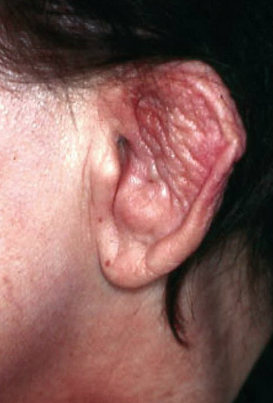
cartilage inflammation can lead to scarring
TREATMENT
As in many autoimmune diseases, treatment proceeds through NSAIDS to steroids and then steroid-sparing(dapsone) and immunosuppressive drugs. Conventional immunosuppressants include azathioprine, cyclophosphamide and hydroxychloroquine. Biologics include TNF inhibitors(adalimumab and infliximab) IL-6 inhibitors (tocilizumab) and JAK inhibitors (tofacitinib.) Our patient was treated with dapsone and low dose steroids which had helped to relieve his symptoms in the past. He improved and was discharged.
FUN FACT
GLP-1 drugs influence the production and degradation of proteoglycans . They have cartilage preserving properties.
For bilateral vocal cord paralysis which happens in relapsing polychondritis; vocal cord pacing is now available especially for surgery induced vocal cord paralysis
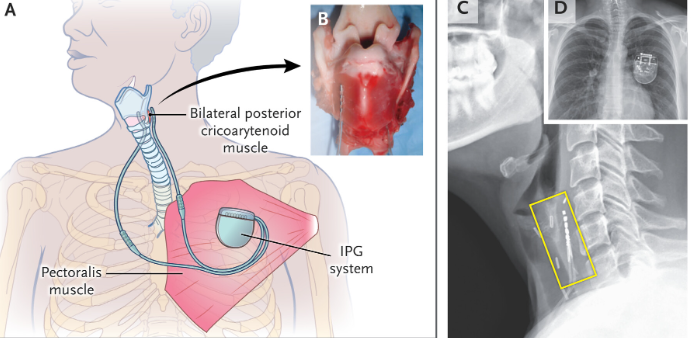
NEJM 2026
Rajakumar I, Karthikeyan K, Pugazhvanan C, et al Relapsing polychondritis: a rare case report. Cureus 2024 Jun 9;15(g):e40172.
Lang B, Rothenfusser A, Lanchbury JS, et al. Arthritis Rheum. 1993;36:660–664. doi: 10.1002/art.1780360513.
Muruganandam M, Rolle n. American College of Rheumatology 2018; vasculitis poster.
Powell M, Li Y, Von Whide K, et al. Bilateral pacing neuromuscular prosthesis for laryngeal paralysis. NEJM 2026 Oct. 1340-1342.
Higgins J Thanarajasingam, Osborn A unique case of relapsing polychondritis presenting with acute pericarditis. Case Rep Rheumatol. 2013 Dec 17;2014:287592.
Ferrada M. Pathology of relapsing polychondritis. Up To Date Sep 2926