A 70 y.o. male with syncope presents to the ED with jaw pain. what needs to be done?
His jaw is minimally displaced.
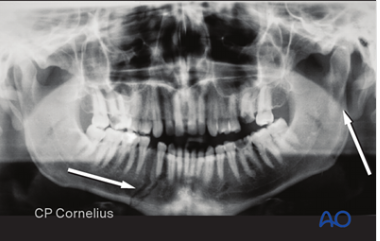
hint: two problems need to be addressed
Our patient had a condylar process fracture in association with an anterior body fracture of the mandible. No other trauma was identified. The syncope, however is sometimes the more severe problem.
MANDIBLE FRACTURE
Mandibular fractures are among the most common (60–70%) maxillofacial fractures observed in emergency rooms . More than 2,500 people suffer a mandibular fracture every year in the USA. The most common causes of maxillofacial fractures are road traffic accidents (40–42%)
In the ED, for the mandible fracture, sensation in the lower lip should be tested in the ED. Damage to the inferior alveolar nerve is not uncommon. Nerve damage the most common if the fracture occurs at the angle of the mandible . Dental fractures need to be identified since most often those teeth will need to be removed. tThe repair to stabilize the mandible will not be done in the ED. Most commonly, open reduction and internal fixation is done for angle fractures.
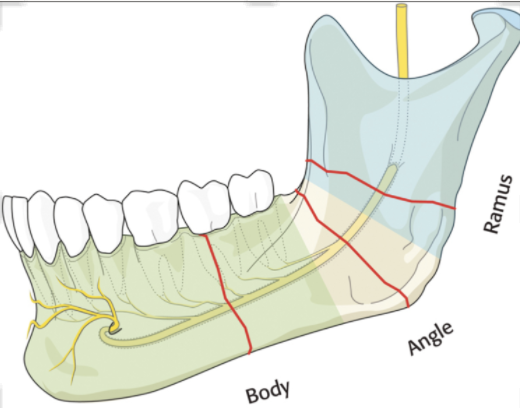
Inferior alveolar nerve
SYNCOPE
Falls account for 15% of visits to EDs in older adults and of those 20-30% are related to underlying syncope. Syncope is defined as a transient loss of consciousness caused by cerebral hypoperfusion. This can be related to reflex syncope, cardiac syncope or orthostatic hypotension.
1. Reflex syncope- results from vasodilation or bradycardia related to dysregulation of the autonomic nervous system. The includes vasovagal syncope, ( usually with a HR of less than 40), carotid sinus hypersensitivity ( a three second pause after carotid sinus massage) and situational syncope (micturition or cough syncope, or blood drawing)
2. Othostatic hypotension- occurs in more than 70% of patients over the age of 70. It is defined as a reduction in BP of at least 20 mm of Hg within three minutes of standing is the definition. Diseases with autonomic dysfunction like Parkinson’s are noted for this.
3. Cardiac syncope- Is most often related to tachycardia or bradycardia. Outflow obstruction as in hypertrophic cardiomyopathy may also cause syncope.
4. Syncope mimics- Many other conditions lead to unconsciousness: seizures, cataplexy, pulmonary emboli, trauma and psychiatric illness.
EVALUATION
The evaluation of an elderly patient in the ED of course begins with a history including medications, and physical, with further imaging if indicated. The history should include eyewitness accounts of the event and family history to include history of sudden death. The physical should include orthostatic blood pressure.
The exam should include carotid sinus massage looking for carotid sinus hypersensitivity.
EKG should be done looking for arrhythmias or conduction abnormalities. If no abnormalities are found an event monitor and cardiac echo should be considered to look for structural heart disease.
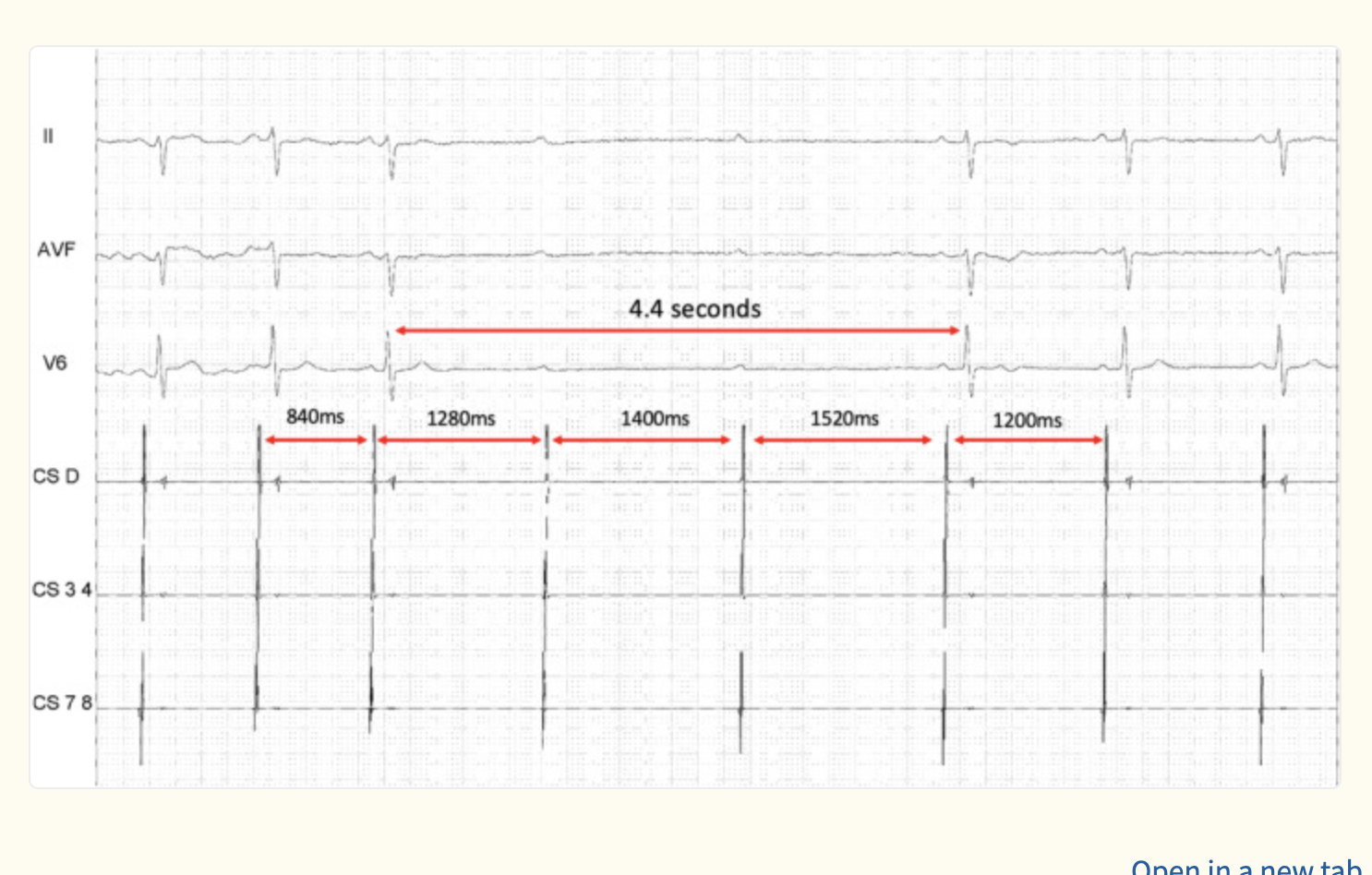
carotid sinus hypersensitivity results in a >3 second pause
Our patient had carotid sinus hypersensitivity and a 3 second pause with carotid sinus massage and a drop in BP of 50 mm. A cardiologist was called and he received a pacemaker. The jaw was repaired after the pacemaker was implanted.
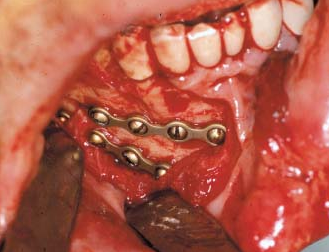
open reduction and internal fixation (ORIF)
FUN FACT
In patients who refuse a pacemaker, epicardial ganglionate plexes can be ablated. Success has been reported with this technique
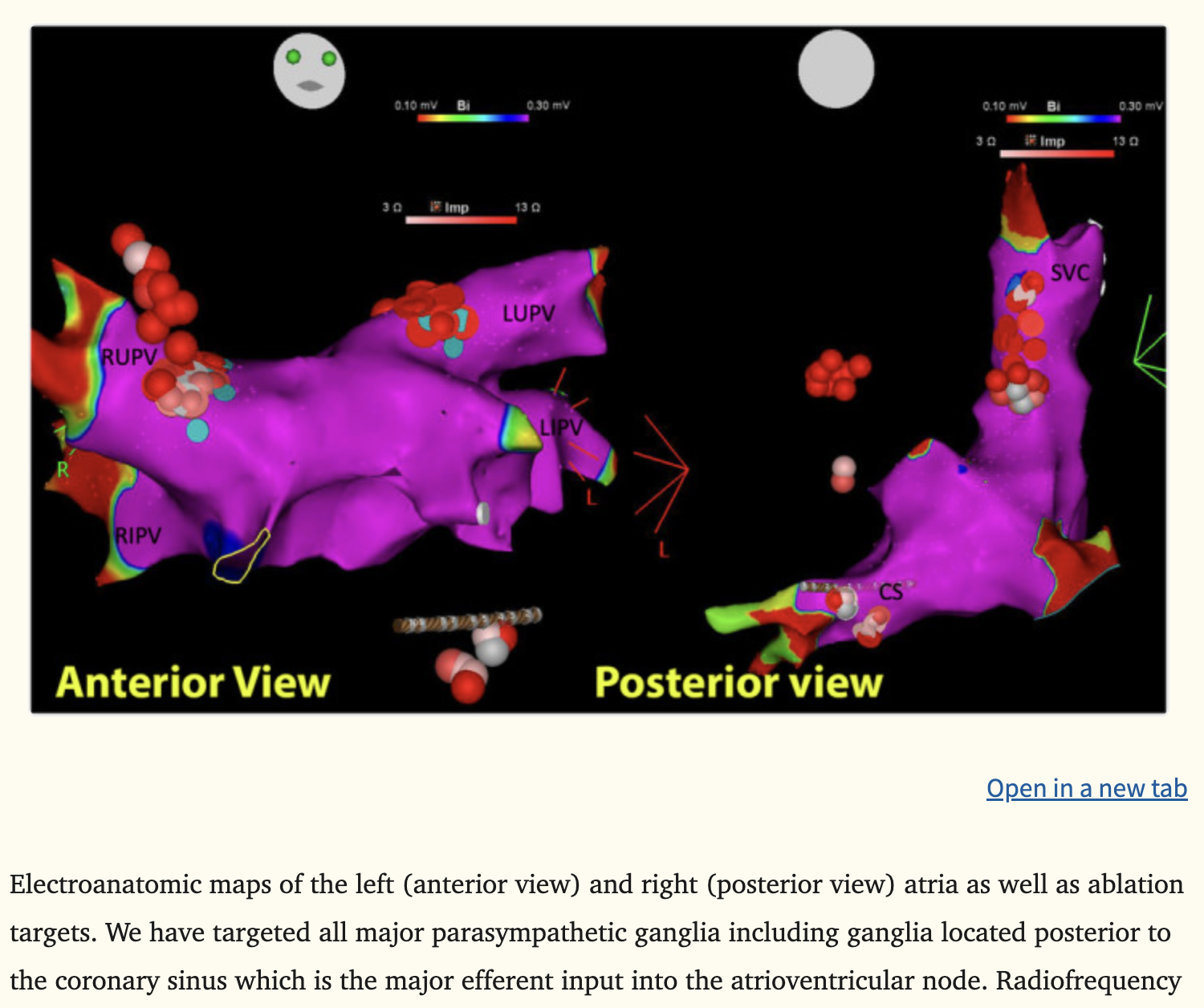
Parasympathetic blockage is possible if the patient refuses a pacemaker
Baskovski E, Ates B, Altin T Cardioneuroablation for carotid sinus syndrome mediated by complete AV block. J Arrhythm. 2023 Aug 23;39(5):810–812.
Bozyel S, Güler TE, Çelik M, Dalgıç N, Şipal A, Yalnız A, et al. Cardioneuroablation for treatment of carotid sinus syndrome secondary to oropharyngeal squamous cell cancer. J Cardiovasc Electrophysiol. 2023;34(5):1305–13.
Simsek T, Erdogan M, UgurL. New design titanium miniplate in mandibular angle fracture treatment: a biomechanical study. J Braz. Soc. Mech Sci Eng. 43,21(2021)
AO Surgery Reference 2021 Buchbinder D. Dept of Otolaryngology, Head and Neck Surgery, Icahn School of Medicine at Mount Sinai, Ellis E. Dept of Oral and Maxillofacial Surgery U of Texas health Science Center at San Antonio. New York second edition 2021.
Pickrell B, Serebrakian A, Maricevich R. Mandible fractures. Semin Plast Surg 1917 May;31(2):100-107. Nardi C, Vignoli C, Pietragalla M, et al. Imaging of mandibular fractures: a pictorial review. Insight Imaging 2020 Feb 19;11:30.