A 56 y.o. woman with a hx of anterior MI and heart failure sp cardiac resynchronization therapy and defibrillator placement (CRT-D).
she was on apixaban for atrial fibrillation and comes to the ED with increasing shortness of breath. She is afebrile and her echo is shown below.
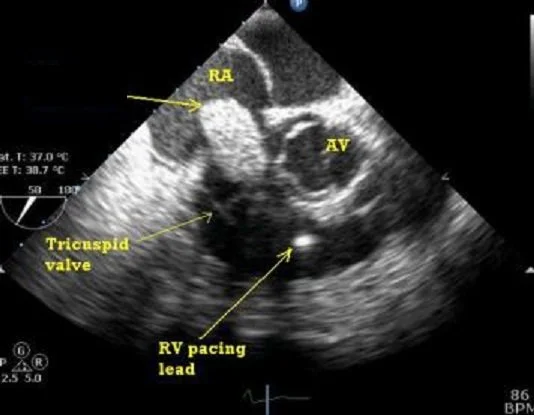
the top arrow points to the lesion
Our patient had a right atrial mass.
The differential of a mass in the heart includes:
Endocarditis- is often accompanied by systemic signs like fever. The incidence of endocarditis in developed countries is 3 to 10 cases per 100,000 people. It is increased in those with medical devices. Blood cultures are useful but often negative in fastidious organisms like Bartonella.
Cardiac metastases-cardiac metastases are 20 to 40 times more likely than primary cardiac tumors. Lung cancer is the most likely source followed by renal cell cancer, melanoma and lymphoma. Cardiac tumors are often associated with a pericardial effusion.
Benign primary cardiac tumors- atrial myxomas are the most common benign cause of cardiac tumors. They are most often found in the left atrium.
Malignant cardiac tumors- 95% of malignant cardiac tumors are sarcomas. They often invade the R atrium. The second most common cardiac tumor is lymphoma. HIV and organ transplant are risk factors for cardiac lymphoma.
Thrombus- A thrombus is the most common cause of an intracardiac mass
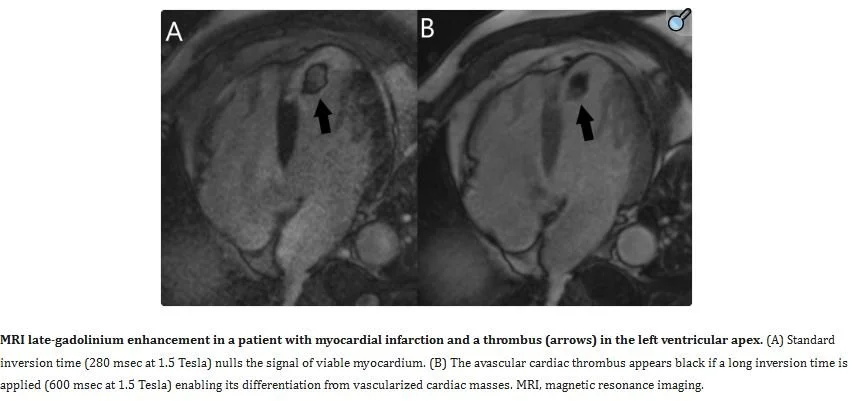
MRI imaging can differentiate a clot from a mass.
Cardiac resynchronization therapy(CRT) is recommended for patients with heart failure and an ejection fraction of less than 35% if they are experiencing symptomatic heart failure. It is especially recommended for those with LBBB and a QRS duration of >150 ms. Between 2006 and 2012 311,086 CRT devices were implanted.
Three leads are implanted in the heart. A Right atrial lead helps the device monitor the upper heart chambers allowing for the timing of ventricular pacing. A right ventricular lead paces the RV. A third lead is threaded into the L coronary sinus overlying the left ventricle. This lead enables coordination between the two ventricles.
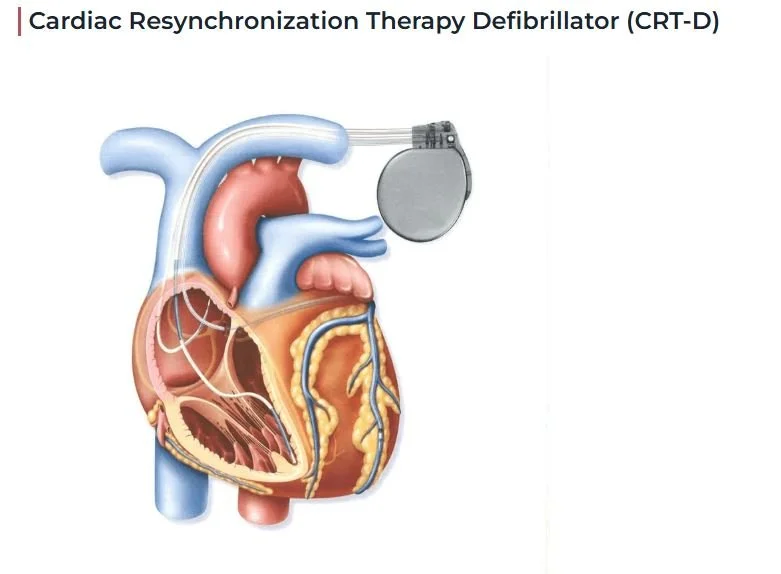
Pacemaker leads have high thrombogenicity. An autopsy investigation revealed thrombi in 48% of the atrial leads and 33% of the ventricular leads studied. Many of them are asymptomatic but they often lead to pulmonary emboli.
Direct acting oral anticoagulants are not as effective as warfarin in some special cases. Well-known conditions include prosthetic valve diseases and moderate-to-severe rheumatic valve diseases. Less known conditions are the presence of intracardiac foreign bodies such as pacemaker leads and the presence of left ventricular aneurysms, which increase thrombogenicity.
Our patient developed a clot on the pacer wire in spite of the fact she was on apixaban. She was treated with warfarin and the clot resolved.
FUN FACTS

digitalis was originally an herbal remedy for dropsy (chf)
Congestive heart failure has had many treatments over the ages. In 1785 William Withering published the first paper on the use of digitalis as a treatment. It is the oldest cardiovascular medicine used today. Even with normal levels its therapeutic range is so narrow that digitalis toxicity can result. It can present in protean ways; with nausea and vomiting, visual changes, hallucinations or even psychosis.
Buttigieg J,Asciak R, Azzopardi C. Pacemaker lead=associated thrombosis in cardiac cresynchronization therapy. BMJ Case Rep. 2015 July 7, 2015:bcr2015210314.
Adar A, Onalan O, Cakan T. development of pacemaker lead thrombosis in a patient with atrial fibrillation during apixaban treatment. J Tehran Heart Cent. 3029 Oct;12(4):183-186.
Novak M, Dvorak P, Kamaryt P, Slana B, Lipoldova J. Autopsy and clinical context in deceased patients with implanted pacemakers and defibrillators: intracardiac findings near their leads and electrodes. Europace. 2009;11:1510–1516. doi: 10.1093/europace/eup216.
Ho G, Bhatia P, Mehta I, et al. Prevalence and short-term clinical outcome of mobile thrombi detected on transvenous leads in patients undergoing lead extraction. ACC Clin Electrophysiol. 2019 June;5(6):657-664.
Raut M, Maheshwari A, Dubey S. thrombus on pacemaker lead. Indian Heart Journal 2015 vol 57, supplement 3:S120-121.
Gona S, Rosenberg J, Fyffe-Freil R. Failure of current digoxin monitoring for toxicity. Review of recommendations to maintain therapeutic levels for efficacy. Front Cardiovasc Med. 2023;10:1179892.
Paar M, Mursic M, Balasko=Josipovic T, et al. Multimodality imaging of cardiac myxomas. Rev Cardiovasc med. 2024 Jun 3;25(6):204.