A 50 y.o. male from Israel comes to the ED with difficulty breathing and loss of smell.
What do you notice when you look in his nose?
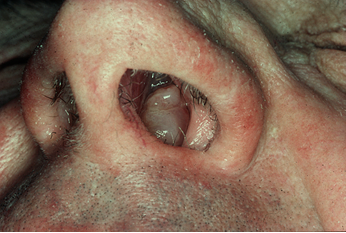
Our patient had a nasal polyp caused by allergic fungal rhinosinusitis ( AFRS) . The most common cause of nasal polyps is chronic inflammation of the nasal mucosa. This can be caused by ongoing immune responses to pollen, dust mites and mold.
ALLERGIC RHINOSINUSITIS
Allergic rhinosinusitis affects 15-30% of people in the US. The nasal mucosal swelling caused by chronic inflammation secondary to allergens causes causes facial pain and pressure, nasal discharge, headaches anda reduced sense of taste or smell.
Nasal polyps can develop depending on the severity of the immune response. Type 2 inflammation, common with nasal polyps, is defined based on the presence of eosinophils and IL-3.
Associated with fungus
The first to report the incidence of allergic fungal rhinosinusitis( AFRS) was Katzenstein in 1983, with an incidence of 6.2% found in individuals with sinusitis in St. Louis, Missouri. The highest level reported incidence in the survey was in Memphis, Tennessee where 23% of sinusitis tested was related to fungus. The intense humidity of the lower Mississippi valley contributes to the growth of fungal spores. The fungus is NON INVASIVE and may form mycetomas but does not erode through the mucosa.
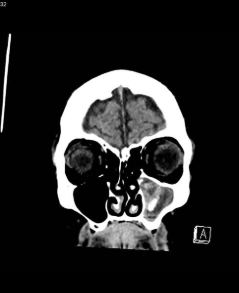
A mycetoma is a fungus ball; in this case in the maxillary sinus
Associated with immune system abnormalities
Nasal polyps are also associated with other diseases that have an immune response. These include cystic fibrosis, asthma and aspirin sensitivity. Samter’s triad which affects 7-10% of the population, includes: aspirin hypersensitivity, nasal polyps and adult onset asthma.
THE DIAGNOSIS
The criteria for diagnosis includes a skin test showing hypersensitivity to the fungus, and/ or positive fungus in sinus washings or culture. Research in mice has shown that those who are most susceptible have a deficient type 3 immune response with low levels of histatin which clears fungal spores. This leads to fungal hyphae which stimulate the inflammatory cascade leading to polyps.
TREATMENT OF RHINOSINUSITIS
1 .The first line treatment is sinus washes . A neti pot is often recommended.
2. Topical steroids are next with flonase or other steroid sprays. This may not work with nasal polyps since the steroid cannot get past the obstruction. Remember: Any steroid can induce glaucoma and should not be used in patients with glaucoma.
A common off label use of budesonide is to open the liquid budesonide respule and put it into a saline rinse to use in a neti pot.
3. Systemic steroids work very quickly but the side effects long-term steroids include: diabetes, osteoporosis, ulcers, and adrenal insufficiency. For this reason it is recommended that if a patient has been prescribed steroids more than twice a year, consideration should be given to a biologic agent and ENT referral. Surgery may be necessary if the openings to the sinus are blocked by polyps.
4. Biologic immunosuppression
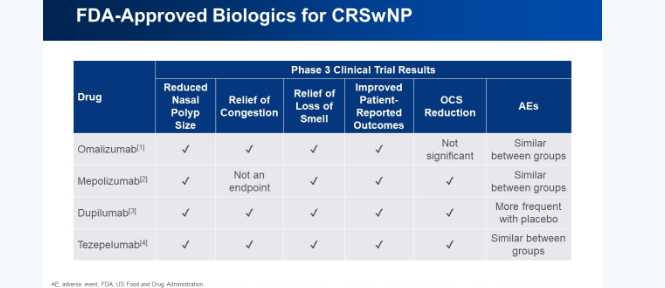
the biologic agents for immune suppression
BACTERIAL SINUS INFECTIONS
Most sinus inflammation is viral and lasts about four weeks. But in certain cases, bacterial infections are more likely and antibiotics are needed. Acute sinusitis usually lasts less than 4 weeks. Antibiotics are recommended for:
A duration of symptoms that lasts over ten days, fevers, and worsening of symptoms after a viral illness. In rare cases, bony erosion can occur from a bacterial infection which blocks sinus drainage as in Pott’s puffy tumor.
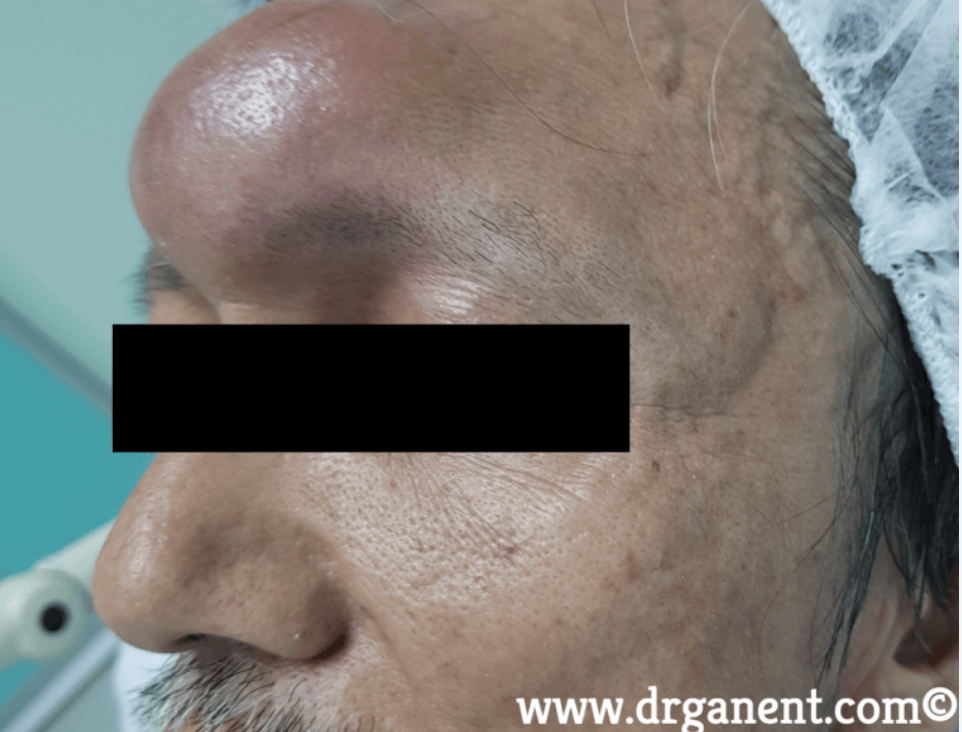
Pott’s puffy tumor; a bacterial sinus infection
Our patient was prescribed budesonide rinses and his polyp resolved. He was also screened for allergic bronchopulmonary aspergillosis because immune reactions to the fungal antigens cause adult onset asthma.
FUN FACTS
The word rhinoceros comes from the ancient Greek rhinokeras meaning nose-horned. Sinus originally referred to a hollow in the fold of a toga which came to stand for a hollow cavity inside the human body in the 15th century.
Tens of thousands of people in Israel have nasal polyps caused by allergic fungal rhinosinusitis. This is probably a combination of genetics and environment.
Grayson J, Hopkins C, Mori E. Contemporary classification of chronic rhinosinusitis beyond polyps vs no polyps. JAMA Otolanyngol Head Neck Surg. 2-2-;146(9):841-838.
Ferguson B, Barnes L, Bernstein J. Geographic variation in allergic fungal rhinosinusitis. In Fungal Rhinosinusitis: a spectrum of disease. 003-6665/00
Katzenstein AA, Sale SR, Greenberger PA: Allergic Aspergillus sinusitis: A newly recognized form of sinusitis. J Allergy Clin Immunol72:89-93, 1983.
Chua A. Jafar A, Luong AM. Update on allergic fungal rhinosinustiits. Annals of Allergy, Asthma and Immunology. 2023. Vol 131(4):300-306.
Glass D, Amedee R. Allergic Fungal Rhinosinusitis: F review. Ochsner J. 2011 Fall:114):271-275.